
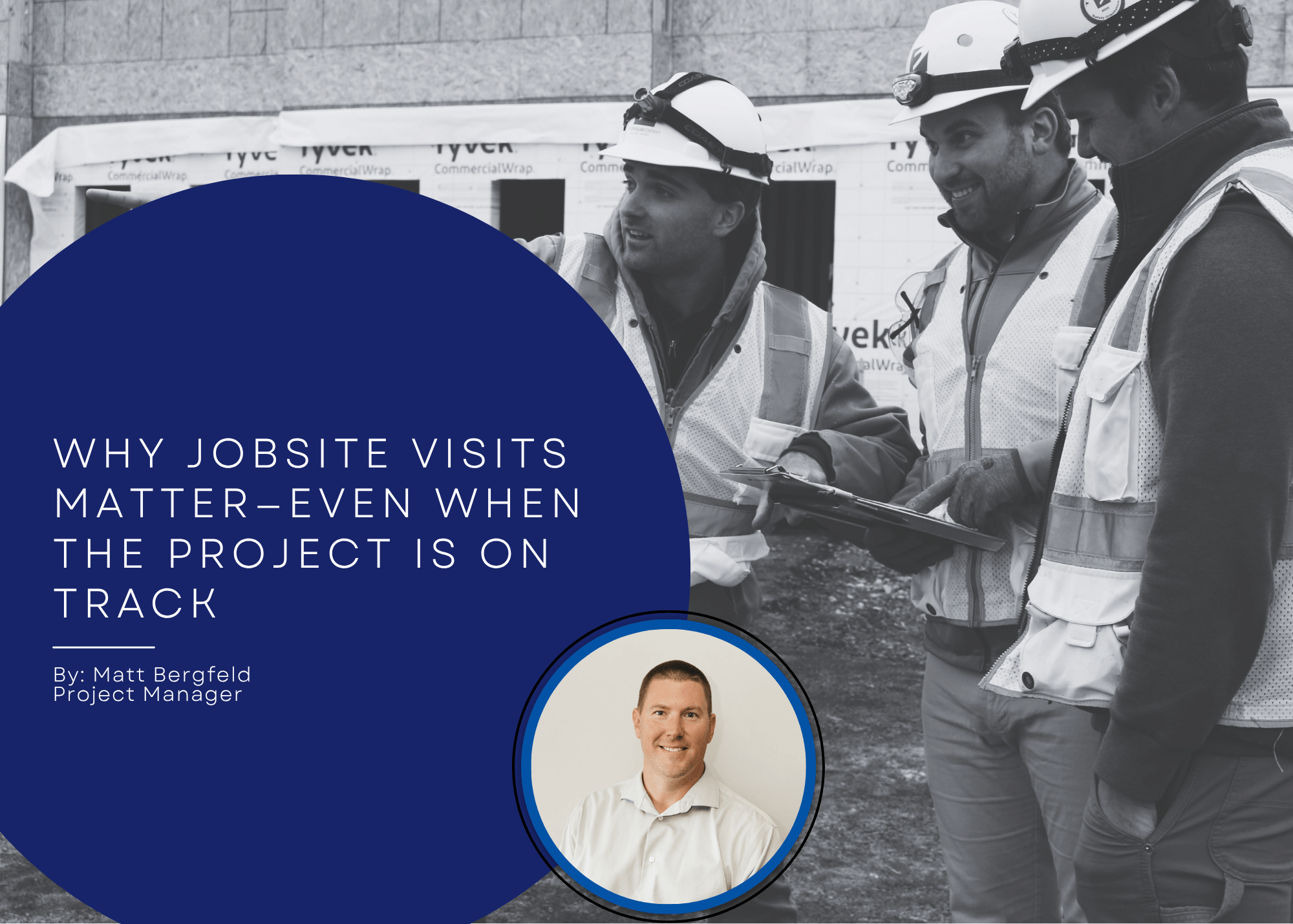
In construction project management, jobsite visits are often associated with solving problems. When a project falls behind schedule, quality concerns arise, or coordination issues develop, everyone understands the value of getting the right people onsite. But some of the most valuable construction site visits happen when everything is going according to plan.
Why Onsite Visibility Beats Reports Alone
Weekly reports, schedules, meeting minutes, and progress photos provide useful data, but they can’t replace seeing the work firsthand. Walking a jobsite gives project managers a clearer read on crew performance, trade sequencing, and whether field conditions truly align with the construction schedule.
It also delivers something surprisingly valuable: a fresh set of eyes.
The Value of a Fresh Perspective on the Jobsite
When you work the same jobsite every day, it’s natural to become accustomed to your surroundings. Someone may walk past the same area multiple times a day and see it the same way each time—not because they’re overlooking their responsibilities, but because familiarity naturally lets certain conditions blend into the background.
Someone who isn’t onsite daily may immediately notice something different: an installation that doesn’t look quite right, a potential trade coordination conflict, an unfinished detail, a housekeeping or safety concern, or a condition worth a second look. Sometimes all it takes is a different perspective to catch an issue before it becomes a bigger problem.
Recognizing What’s Working on Successful Construction Projects
Jobsite visits also help project teams understand why a project is succeeding. Strong construction projects don’t happen by accident. Great field leadership, subcontractor coordination, proper manpower, timely material deliveries, and effective communication all keep momentum going. Being onsite allows the project management team to recognize those efforts and reinforce the practices driving positive results.
Looking Ahead: Proactive Planning During Site Visits
A productive jobsite visit should also look ahead:
- Are upcoming work areas ready?
- Are materials and manpower available?
- Are RFIs, submittals, and inspections resolved?
- Are predecessor activities truly complete enough for the next trade to begin?
- These conversations are far easier to have before an issue reaches the critical path.
Strengthening Relationships With the Field Team
Most importantly, the project management team shouldn’t only show up onsite when something is wrong. Visiting successful projects strengthens relationships with superintendents, subcontractors, and field personnel—while showing that good performance is noticed and appreciated.
Building a Culture of Proactive Construction Management
The goal of a jobsite visit isn’t to find something wrong. It’s to bring a fresh perspective, recognize what’s working, identify potential risks early, and help maintain momentum.
Strong construction project management isn’t only about reacting when things go wrong—it’s about staying engaged so projects continue to go right.

leave a comment